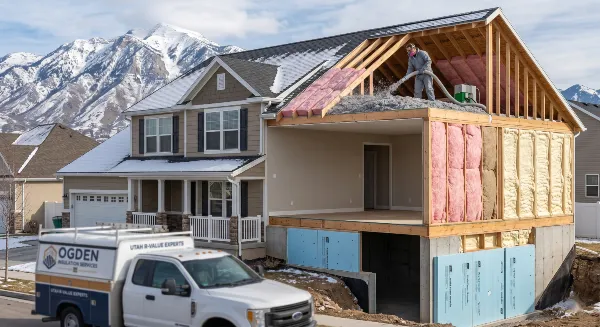
Knowing Your Home Climate: Comparing Modern Ogden, Utah Insulation Solutions
Living along the Wasatch Front in Ogden, Utah, means navigating a climate of dramatic shifts. Our community enjoys the legendary powder of the nearby ski resorts in the winter, but we also endure the scorching, dry heat that radiates off the salt flats in the summer. For many homeowners, these seasonal swings aren't just a weather report—they are a direct threat to indoor comfort and a significant drain on the monthly budget. Whether the biting canyon winds are whistling through your siding or the August sun is turning your attic into an oven, your home’s insulation is the primary defense system protecting your family.
If you’ve found this guide, you likely know the frustration of an inefficient home. Perhaps you’ve noticed the "stack effect"—where warm air escapes through the roof while drawing icy drafts in through your basement floor. You might see ice dams forming on the eaves of your Taylor neighborhood home or realize your HVAC system is struggling to keep the master bedroom below 80 degrees. We know how stressful these issues can be; your home should be a sanctuary, not a source of financial anxiety. While the world of R-values and thermal envelopes can seem overly technical, upgrading your insulation is the most effective way to regain control over your environment and lower energy bills.
This article provides a deep dive into the most effective insulation materials used in Ogden today, comparing their performance, costs, and local applications to help you choose the best fit for your property.
The Science of Staying Comfortable: R-Value and the Utah Climate
To make an informed choice, we first have to talk about "R-Value." This is the numerical rating of an insulation’s ability to resist heat flow. In a place like Northern Utah, where temperatures can swing 50 degrees in a single day, R-Value is your best friend.
The Department of Energy categorizes Ogden in a specific climate zone that requires robust protection. For a standard attic insulation upgrade, we generally aim for a rating between R-49 and R-60. In older homes found near the Ogden River Parkway, you might only have R-11 or R-19 currently—leaving you drastically under-protected. Achieving the right R-value doesn't just keep you warm; it prevents the heat from the summer sun from penetrating your living space, drastically reducing the workload on your air conditioner.
Evaluating the Options: Top Insulation Choices for Ogden Homeowners
Every home in Ogden has a unique "thermal fingerprint." A mid-century rambler in Lynn will have very different needs than a brand-new build in the Shadow Valley area. Here is a breakdown of the four most common solutions.
1. Fiberglass Insulation (The Versatile Classic)
Fiberglass remains the most recognizable insulation on the market. Composed of spun glass fibers, it is available in two main formats that serve different purposes.
Batts and Rolls: These are the pre-cut blankets designed to fit between standard framing. They are the go-to for many DIY enthusiasts tackling a basement finish or a garage project.
Blown-In Fiberglass: This involves using a professional-grade machine to distribute loose glass fibers across an attic floor.
The Ogden Context:
In newer developments further north toward Pleasant View, fiberglass is often the standard. It is incredibly fire-resistant and relatively inexpensive.
Pros: It’s affordable and doesn't settle as much as other materials over time. Blown-in fiberglass is a fantastic way to "cap" existing insulation to reach modern R-60 standards.
Cons: Its biggest weakness is airflow. Fiberglass acts like a filter rather than a barrier; if your home has significant air leaks, the cold Ogden wind can blow right through it. Proper air sealing is a mandatory prerequisite for fiberglass to work effectively.
Best For: New construction on a budget, unfinished basements, and topping off existing attic layers.
2. Cellulose Insulation (The Eco-Friendly Powerhouse)
If you are looking for a material that offers more density than fiberglass, cellulose is the leading alternative. Made from approximately 80% recycled paper and treated with borates for fire and pest resistance, it is a favorite for those wanting a "greener" home.
The Ogden Context:
Cellulose is the "secret weapon" for retrofitting the historic homes of East Central Ogden. If you live in a beautiful 1920s bungalow with empty wall cavities, a professional insulation contractor can perform a "dense-pack" installation. By drilling small, discreet holes in the exterior, they can fill the walls with cellulose, providing modern comfort without destroying your original plaster walls.
Pros: It has a higher R-value per inch than fiberglass. Because it is denser, it is much better at deadening sound—a major plus if you live near the noise of Harrison Boulevard.
Cons: It is heavy and can be quite dusty during the installation process. It must be kept bone-dry; if a roof leak occurs, cellulose can retain moisture and lose its effectiveness.
Best For: Soundproofing, eco-conscious homeowners, and retrofitting older "empty-wall" homes.
3. Spray Foam Insulation (The Ultimate Air Seal)
Spray polyurethane foam (SPF) is widely regarded as the high-performance choice. It is applied as a liquid that expands into a thick foam, creating a custom-fit thermal seal.
Open-Cell Foam: This stays somewhat flexible and is excellent for blocking sound and providing high-quality insulation in interior walls.
Closed-Cell Foam: This is much denser and becomes rigid. It acts as a vapor barrier and can actually increase the structural integrity of your roof or walls.
The Ogden Context:
For residents on the East Bench who deal with intense canyon winds, spray foam is often the only way to truly "draft-proof" a home. It is particularly effective for "hot roofs"—where the insulation is applied directly to the underside of the roof deck. This allows you to bring your furnace and ductwork into a climate-controlled space, which is a game-changer for energy efficiency in Utah’s climate.
Pros: It provides a 2-in-1 solution by insulating and air sealing simultaneously. It is the most effective way to eliminate cold drafts and hot spots.
Cons: The initial investment is higher than other materials. It requires a professional crew with specialized safety equipment and knowledge of "off-gassing" protocols.
Best For: Difficult-to-reach areas, vaulted ceilings, rim joists, and homeowners seeking the highest possible energy savings.
4. Rigid Foam Board (The Foundation Specialist)
These are solid panels of foam that provide high R-values in very thin profiles. You won't typically see these used to fill an attic, but they are essential for specific parts of the home.
The Ogden Context:
In many Ogden homes, the basement is the coldest room in the house. Rigid foam is the ideal solution for insulating concrete foundation walls before finishing a basement. It prevents the "weeping" of moisture from the concrete into your studs and drywall, protecting your home from mold.
Pros: It is completely waterproof and offers a consistent thermal break.
Cons: It must be cut precisely to fit and requires all gaps to be sealed with "canned foam" or specialized tape to prevent thermal bridging.
Best For: Exterior sheathing during a siding replacement and insulating basement foundations.
The Essential Step: Why Air Sealing Matters Most
Regardless of which material you choose, the most important thing to remember is that insulation is only half the battle. Think of your home like a winter coat: insulation is the fleece that keeps you warm, but air sealing is the windbreaker that stops the breeze from cutting through.
Many insulation contractors in Ogden now offer "Search and Seal" services. Before they blow in new material, they use expanding foam and caulk to seal the "hidden" holes in your attic—places where wires, pipes, and recessed lights penetrate the ceiling. Without this step, your expensive new insulation will still let your heated air leak out like a chimney.
Conclusion: A Smarter Way to Live in Ogden
Investing in your home’s thermal envelope is perhaps the least "glamorous" renovation you can undertake, but it is undoubtedly the most rewarding. It doesn't just lower your utility bills; it changes the way your home feels. It means your kids can play on the floor without feeling a chill, and you can sleep through a summer heatwave without the constant drone of a struggling A/C unit.
If you’re tired of the "Wasatch Weather Rollercoaster" affecting your comfort, it’s time to take action. Reach out for a free insulation estimate or a home energy audit. By choosing the right material for your specific Ogden neighborhood and ensuring a professional installation, you can turn your house into a high-performance, cozy retreat for decades to come.
