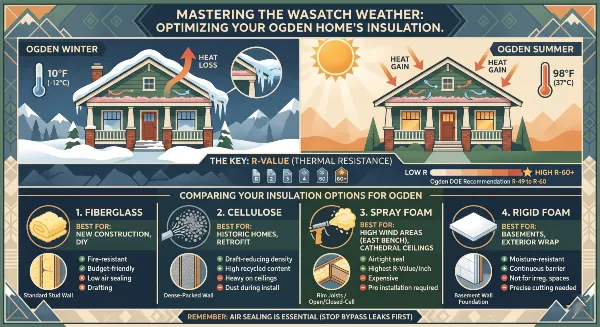
Mastering the Wasatch Weather: A Guide to Optimizing Your Ogden Home’s Insulation
Residing in Ogden, Utah, means embracing a landscape of dramatic shifts. We pivot from the freezing, snow-dusted peaks of the Wasatch Range to the scorching, arid heat of the high desert in a matter of months. For local homeowners, these seasonal swings aren’t just a matter of wardrobe changes—they are a direct challenge to your indoor comfort and your wallet. When the canyon winds surge or the summer sun turns your roof into a radiator, your insulation is the primary defense system keeping your living space habitable.
If you’ve noticed ice dams clinging to your gutters, drafty electrical outlets, or an air conditioner that fights a losing battle every August, your home is likely under-insulated. While hidden projects like attic upgrades aren't as flashy as a new kitchen, they are the most effective way to stabilize your home’s climate and slash monthly energy expenses.
The Metric of Comfort: R-Value in Northern Utah
To choose the right material, you must first understand R-Value. This number represents a material's thermal resistance; the higher the R-Value, the more effectively it prevents heat from escaping in the winter or entering in the summer.
In the Ogden climate zone, the Department of Energy suggests an attic R-Value of R-49 to R-60. Because our winters are harsh and our summers are intense, hitting these benchmarks is essential for lowering the strain on your furnace and AC unit.
Comparing Your Options: Four Insulation Solutions for Ogden
Every home has different needs based on its age and construction style. Here is a breakdown of how the most popular materials perform in our local environment.
1. Fiberglass (The Industry Standard)
Fiberglass is the classic "pink fluffy" material. It consists of fine glass shards spun into a wool-like consistency.
Best Local Use: Ideal for new builds in areas like Shadow Valley or DIY basement finishing.
Pros: Fire-resistant and very budget-friendly. Blown-in fiberglass is a great way to "top off" existing insulation to reach modern standards.
Cons: It doesn't stop airflow. In drafty Ogden homes, cold wind can blow right through fiberglass if the house hasn't been properly air-sealed first.
2. Cellulose (The Eco-Friendly Heavyweight)
Made from recycled paper treated with fire retardants and pest-repelling borates, cellulose is denser and more environmentally conscious than fiberglass.
Best Local Use: Retrofitting the historic bungalows and Victorians near 25th Street. Its density makes it a fantastic sound dampener for homes near busy corridors like Washington Boulevard.
Pros: Better at blocking air infiltration than fiberglass batts. High recycled content.
Cons: It’s heavy; older ceilings must be checked for structural integrity before a deep layer is added.
3. Spray Foam (The High-Performance Choice)
This is a chemical product that expands upon application to create an airtight seal. It comes in Open-Cell (flexible and breathable) and Closed-Cell (dense and waterproof).
Best Local Use: Homes on the East Bench that face heavy wind loads. It’s perfect for sealing rim joists or creating conditioned attic spaces for HVAC equipment.
Pros: Eliminates drafts entirely and offers the highest R-Value per inch.
Cons: The most expensive option. It requires professional installation and specialized equipment.
4. Rigid Foam Board
These are solid panels made of sturdy plastic foam.
Best Local Use: Essential for insulating concrete basement walls or as an exterior wrap under new siding.
Pros: Completely moisture-resistant and provides a continuous thermal break.
Cons: Not suitable for filling irregular attic spaces; must be cut and taped precisely to be effective.
Strategy: Choosing for Your Neighborhood
The right choice depends on your specific goals:
The Budget Retrofit: If you have an older home with settled insulation, blowing cellulose over the top is often the fastest way to see a return on investment.
The Performance Build: If you are building near the mouth of Ogden Canyon, spray foam is the gold standard for blocking those relentless winds.
Pro Tip: Don't Ignore Air Sealing Insulation is like a wool sweater; it keeps you warm, but a cold wind will blow right through it. Before adding material, ensure your contractor seals "bypass" leaks—holes for pipes, wires, and lights that allow conditioned air to escape into your attic.
Final Thoughts: Investing in Your Home’s Envelope
Upgrading your insulation is a quiet investment that pays dividends every time you receive a utility bill. It transforms a house from a place that is "difficult to heat" into a sanctuary that remains cozy year-round. If you’re tired of fluctuating temperatures, reaching out for a professional attic inspection is the first step toward a more efficient, comfortable Ogden home.
